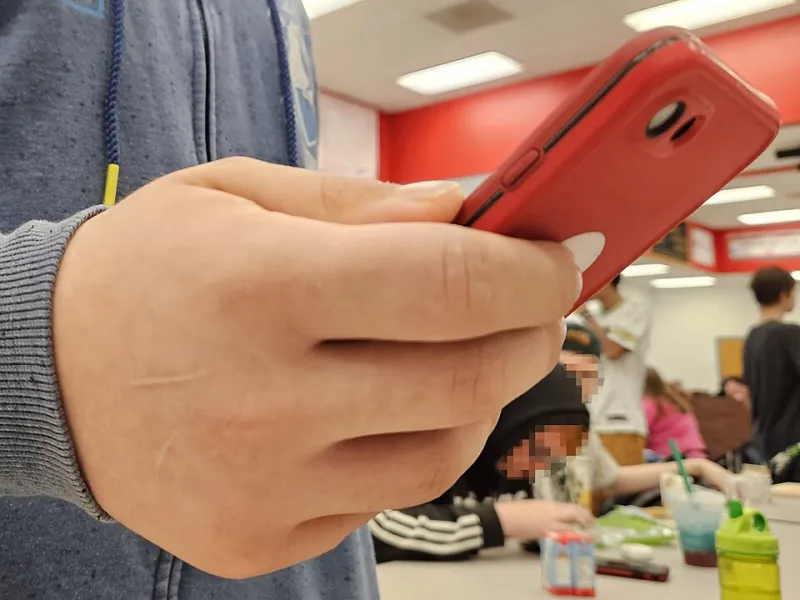
All Thumbs, No Skin: The Quiet Epidemic of Americans Who Flirt Better Than They Touch

There's a specific kind of modern exhaustion that hits around 11 p.m. You've matched with someone. You've traded voice memos. You've sent a photo you'd never show your mother. And then you close the app, roll over, and go to sleep alone. Again.
If that sounds familiar, you're not broken. You're statistically normal. A growing stack of research suggests American adults are talking about sex, consuming sex, and performing desire online more than any generation before — while the actual, physical, skin-on-skin part quietly starves. We've become a nation of incredible flirters and increasingly rare lovers.
The Great Substitution
Here's the uncomfortable mechanic nobody wants to name: digital desire is cheaper. It costs nothing to fire off a 'wyd' at midnight. It costs nothing to open a private tab. It costs nothing to keep six half-dead conversations simmering in your DMs like pilot lights.
Real sex, by contrast, demands things screens don't: scheduling, vulnerability, showering, driving across town, being seen in bad lighting by someone who could reject you in real time. Dr. Esther Perel, the Belgian psychotherapist whose work on modern intimacy has shaped a decade of American conversations about desire, has long argued that technology gives us the illusion of connection without its demands. Your phone will never have a headache, never need to leave for an early flight, never look at you weird after.
So the brain, being an efficiency machine, takes the deal. Why risk the real thing when the simulated thing is always available, always flattering, and never requires you to be brave?
Sexually Active, Technically
Ask a 28-year-old in Chicago or Phoenix or Portland if they're sexually active, and many will say yes — and mean it. They're sexting someone in Denver. They're maintaining a situationship that lives entirely in Instagram DMs. They're on their third dating app refresh of the evening.
The activity is real. The sex isn't.
This isn't a moral panic piece. Nobody at UndressHer is here to shame a good sext — we've written plenty about why saying what you want out loud is the hottest move you can make. The problem isn't desire expressed digitally. It's desire trapped digitally. When the group chat becomes the destination instead of the runway, you've got a loop that never closes.
And loops are addictive by design. Match, message, ghost, repeat. Each cycle delivers a little hit of novelty — the same dopamine math behind why you keep opening the app even when you're bored of it. Researchers who study app behavior have noted that the swipe-and-match experience mimics a slot machine payout schedule. The bedroom, meanwhile, pays out slower and requires you to leave the casino.
Where It Shows Up in Real Life
The tell-tale signs are subtle at first. You can describe someone's texting style in detail but couldn't tell me what their cologne smells like. Your 'type' has shifted toward people who are better over text than in person. A first date feels like an inconvenient detour from a conversation that was already 'going somewhere' for six weeks.
One more: physical touch starts to feel loud. Not bad — loud. A hand on your arm registers like a speaker turned up after months of headphones. Bodies have a calibration problem too, and screens desensitize us to the quiet signals — breath, warmth, weight — that make real intimacy feel like music instead of noise.
The Self-Audit: Where Do You Actually Fall?
Be honest. Nobody's watching. Answer each with yes or no:
- Have you sustained a flirty conversation for more than two weeks without any plan to meet?
- Do you feel more confident over text than face-to-face with someone you're into?
- When a match suggests meeting up, is your first reaction mild dread?
- Have you canceled or 'soft-canceled' (slow-faded) a real date to keep texting someone else?
- Does your screen time report include apps or tabs you'd describe as 'just checking'?
Score:
- 0–1: You use the tools; the tools don't use you. Carry on.
- 2–3: You're in the gray zone — desire is flowing, but it's pooling in your phone instead of your life.
- 4–5: Welcome to the loop. Your digital sex life is thriving; your physical one is on life support, and you're the one holding the plug.
Closing the Gap Without Going Off the Grid
Nobody's suggesting you throw your phone in the Hudson. Digital flirting is a legitimate and genuinely fun part of modern desire. The fix is directional, not total: make the screen a doorway, not a room.
A few moves that actually work:
- Set an expiration date on conversations. If a thread is still going strong after ten days with no plan, either propose one or let it go. Momentum doesn't age well.
- Move to voice or video early. Hearing someone's laugh recalibrates your brain from 'character in an app' to 'person in the world.'
- Cap the consumption. If solo screen habits are eating your social energy, treat them like a happy hour — fun in moderation, corrosive as a lifestyle.
- Choose one real-world rep per week. A date, a dance floor, a party. Physical confidence is a muscle, and it atrophies exactly like one.
The point isn't less desire. It's desire that ends somewhere. Your thumbs are talented — nobody's denying that. But at some point, the group chat has to count for less than the person in the room. Put the phone face-down. That's where the good stuff lives.