Press Play or Shut It Off: The Secret Psychology of Your Bedroom Soundtrack
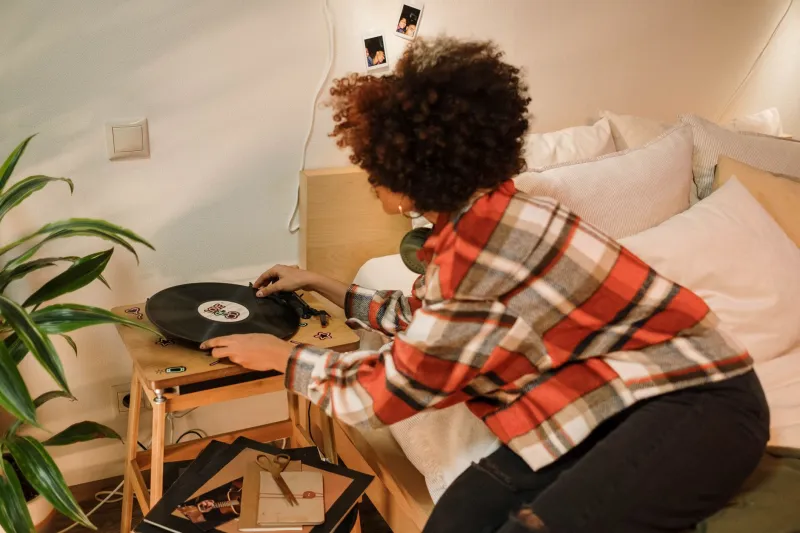
Nobody plans it. That's the first thing everyone admits. You're at someone's apartment in Chicago, or a studio in Queens, or a house in the suburbs outside Phoenix, and things are heading where things go — and then someone's phone gets unlocked and suddenly the room has a soundtrack it didn't ask for.
And here's the part nobody says out loud: that choice told you everything.
The Big Three Playlists of American Sex
Ask around and you'll find the same audio universe orbiting every bedroom in the country. There's the Smooth Classics crowd — Marvin Gaye, Sade, maybe some Frank Ocean if they think they're interesting. There's the EDM Anxiety crowd, who somehow think a festival drop belongs anywhere near a mattress. And then there's the Lo-fi Chill crowd, who have essentially turned sex into a study session.
Each one is a confession. The Sade person wants you to know they've done this before and they're unbothered. The EDM person is trying to generate energy they don't actually have. The lo-fi person — God bless them — has confused ambiance with avoidance.
A woman we'll call Dana, 34, from Atlanta, put it plainly: "A guy put on a 40-minute 'sexy jazz' YouTube compilation and I knew, before we touched, that he'd rehearsed this. That's not necessarily bad. But it was a monologue, not a conversation."
What Silence Actually Says
Silence gets a bad reputation, but it might be the most honest audio choice available. When there's no music, every sound is real — breathing, the bed, the small involuntary noises people make when they stop performing.
That's exactly why so many people can't handle it.
Music is a cover. It fills the gaps, papers over awkward pauses, gives you somewhere to look. Kill the music and you're naked in more ways than one. Some couples discover this accidentally — the speaker dies, the Bluetooth fails, and suddenly they're having the most present, unedited sex of their relationship.
The catch? Silence only works when both people are comfortable in their own skin. For everyone else, it's just a spotlight with no exit.
Chaos, Confessed
Then there's the wildcard category: people who put on something completely wrong. A punk record. A true crime podcast they forgot was queued. One guy we heard about who went with the Hamilton cast recording, which is either a war crime or a power move depending on who you ask.
But chaos can be intentional, and when it is, it works. Choosing something unexpected says, I'm not following a script. It breaks the tension in a useful way, gets both of you laughing, and laughter — ask any couples therapist — is the fastest route to actual comfort. The best sex usually doesn't happen at peak seduction. It happens after someone cracks a joke and the pressure evaporates.
The Songs They Can Never Hear Again
Every adult has them: tracks permanently stained by a specific night. A 41-year-old from Denver told us he can't hear "Ocean Eyes" without thinking about an ex who cried during it. A woman in Portland said a certain Weeknd song now triggers a memory of the worst date of her life, one she fled mid-song.
This is your brain doing exactly what it's built to do. Music and memory are wired together, and the emotional charge of sex makes the association permanent. Which cuts both ways — the right song, repeated with the right person, becomes a shortcut to desire itself. Couples who build a shared soundtrack over years are essentially installing a trigger. Press play, and both nervous systems know what time it is.
How to Actually Choose
Stop picking music for how it sounds. Pick it for how it paces you.
Slow tempo — roughly 60 to 80 beats per minute — drags your body down to its rhythm. It slows hands, deepens breathing, stretches out everything that fast sex rushes past. If your problem is finishing too quickly or rushing the whole thing, your playlist is part of the cure.
Want intensity instead? Build a progression. Start sparse and quiet, let it thicken. Your ear notices the shift before your brain does, and the escalation feels inevitable rather than forced.
And one hard rule: no lyrics you'll both be tempted to sing. Nothing kills momentum like two people mouthing words at each other mid-encounter. Or doesn't. See: chaos theory, above.
The Real Answer
The music was never about the music. It's about whether you made a choice at all, or just let the algorithm decide the mood of your most intimate moments.
Curate it. Or kill it entirely. Either one works. What doesn't work is the default — the same tired playlist, pressed by autopilot, while the most interesting person in your life waits to see what you're actually like when the songs run out.