Scroll Back to Them: The Contact Card You Keep Like a Loaded Gun in the Drawer
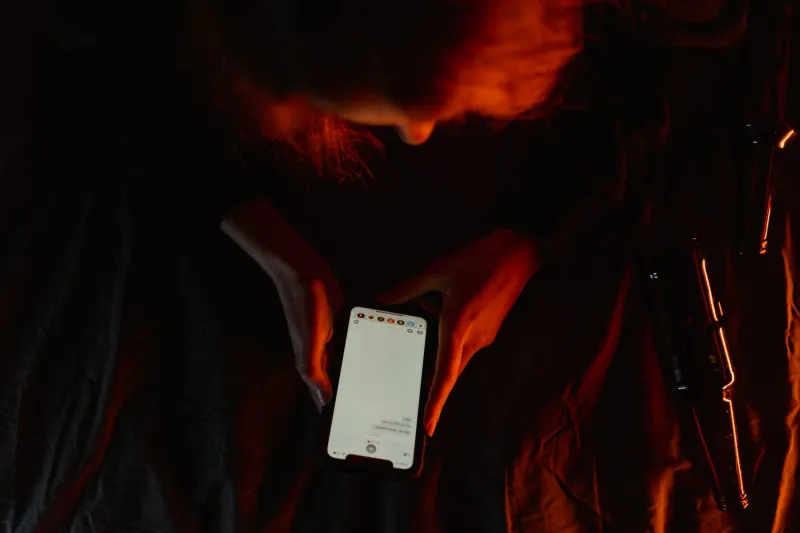
Be honest. Somewhere between 'Aaron from work' and 'Amazon Delivery' in your contacts, there's a name that makes your thumb hesitate. Maybe it's saved under a fake label — 'Do Not Text,' 'Gym Guy 2019,' 'No.' Maybe it's just their name, plain and quiet, like a landmine dressed as a contact card.
You've deleted photos. You've muted the chat. But the number? The number stays. And you're not alone — not even close.
The Archive Nobody Admits To
There's a reason the phrase 'the one that got away' exists and not 'the one who mildly underperformed.' Americans don't do clean breaks with desire. We do soft deletes. We archive. We let the thread sit at the bottom of Messages like sediment.
A 2023 survey from a dating app found that a huge chunk of respondents admitted to keeping an ex's number 'just in case.' Just in case what? The house catches fire and you need to call the person you undressed in 2018?
No. 'Just in case' is the polite cover story for a much simpler truth: part of you doesn't want the door fully closed. Deleted feels final. And final is a feeling most of us would rather postpone.
Three Reasons the Number Survives
After talking to enough friends, strangers, and one very candid bartender in Chicago, the reasons basically sort into three buckets.
1. The Ego File. Keeping their number is proof it happened. Proof you were wanted, once, by someone specific. Deleting it feels like handing back evidence in a case you won.
2. The Open Tab. Some connections end without an ending. The vibe was there, the timing wasn't, and nobody ever said the last word. That unsaid word has weight. The number is where you store it.
3. The Emergency Fantasy. This is the one nobody says out loud: on a bad night, a boring Tuesday, a wedding with an open bar, you like knowing the option exists. Not that you'd use it. But it's there. Like a loaded gun in a drawer you swear you never open.
Nostalgia vs. Unfinished Business
Here's where it gets worth thinking about, because these are not the same animal.
Nostalgia is warm and finished. You remember the hotel in San Diego, the terrible playlist, the laugh. You can hold that memory without wanting to reboot it. Nostalgia doesn't text back — because you never text it.
Unfinished desire is a different frequency. It hums. It activates when you're lonely, bored, or freshly rejected by someone new. It says this time it would work out with total confidence, despite zero evidence. Nostalgia looks at the past. Unfinished desire camps out in the future and calls it history.
The test: does the memory make you smile and move on, or does it make you check their Instagram story at 1 a.m.? One is a keepsake. The other is a leash.
When Keeping It Stops Being Harmless
Look, nobody's coming to confiscate your phone. Keeping a number is not a crime. But there's a cost curve, and it steepens fast:
- It's costing you presence when you compare every new person to a highlight reel you never have to live with.
- It's costing you momentum when 'what if' becomes the reason 'what's next' never gets a fair shot.
- It's costing you honesty when you keep the number while telling yourself — and them — a story about being over it.
- It's costing you actual cash if you're paying for a storage plan full of screenshots you can't look at without a drink first. (Yes, this happens. Digital hoarding of intimacy is real, and the cloud makes it frictionless.)
The line is simple: harmless becomes harmful the moment the kept thing changes your behavior instead of just your storage.
The Delete Test
If you're unsure which category your contact card falls into, try this. Imagine deleting it right now — not blocking, not a dramatic send-off, just delete. Notice your gut reaction.
Relief? It was dead weight. Indifference? It was already gone; you were just storing the receipt. Panic? Okay. That panic is the real information. It means the number isn't a memory — it's an escape hatch you've been keeping propped open.
And an open escape hatch does something sneaky: it keeps you from fully unpacking anywhere new. Why invest in the room when the exit is right there?
The Case for Closing the Tab
There's a version of you that doesn't need the drawer, the archive, the just-in-case. That version understands something the hoarder-brain fights: real intimacy requires available space. You can't pour a new connection into a container that's already full of an old one's residue.
Undressing someone — really undressing them, in every sense — is an act of presence. It only works in the now. Every contact card from the past that you keep on life support is a small withdrawal from that account.
So here's the move, and it's not dramatic: if it's nostalgia, let the memory live in your head and let the data go. If it's unfinished, finish it — in your own head, honestly, without hitting send. And if it's the emergency fantasy, ask yourself what you're bracing against, because that answer has nothing to do with them.
The ex in your phone isn't holding you. You're holding them. Which means you're also free to put them down.
Your call. Literally.